Baretto: A Smooth Handwritten Script Font for Web Design
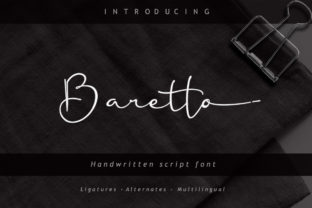
I was staring at a blank hero section for a boutique coaching website, trying to find the right balance between professional credibility and approachable warmth. The client wanted something that felt personal, like a note from a friend, but clean enough to look premium on a mobile screen. I had tried several standard sans serif fonts for the headline, but they all felt too cold and corporate. Then, I pulled up Baretto, a beautiful smooth handwritten script from the Script Amp category, and the mood of the entire landing page shifted instantly.
In web design, typography is often the silent voice of your brand. It dictates how users feel before they even read a single word. Testing Baretto in this real-world layout revealed why it has become such a favorite among digital creators. It isn't just another decorative script; it is a versatile typeface that brings an amazing handwritten feel without sacrificing readability or modern elegance. Here is my practical review of how Baretto performs in responsive layouts, branding assets, and digital experiences.
Bringing Personality to Hero Sections and Headlines
The first place I tested Baretto was the main H1 tag of the homepage. In web design, the hero section is prime real estate. It needs to grab attention immediately while establishing the visual hierarchy. Many script fonts struggle here because their flourishes can get lost on smaller screens or clash with background images. Baretto, however, maintained its clarity and charm.
The strokes are fluid and confident, mimicking the natural flow of a pen but with a consistency that feels designed for the digital age. When I placed the headline "Design Your Dream Life" over a soft, textured background image, the font popped beautifully. It didn't compete with the imagery; instead, it complemented it. This makes Baretto an excellent choice for display use in landing pages, course sales pages, and portfolio homepages where you need to make an emotional connection quickly.
For online brands, especially those in wellness, fashion, or creative services, using a premium font like this elevates the perceived quality of the site. It signals to the visitor that attention has been paid to detail. Unlike generic system fonts, Baretto adds a layer of bespoke craftsmanship to your web design, helping to build trust and engagement from the very first scroll.
Readability and Responsive Performance
A common concern with script fonts in UI design is how they scale across different devices. Will the ligatures break on a tablet? Will the descenders disappear on a smartphone? During my testing, I resized the browser window repeatedly to simulate mobile, tablet, and desktop views. Baretto held up remarkably well.
The character spacing is balanced, ensuring that words remain distinct even at slightly smaller sizes. However, as with any handwritten font, there are limits. I found that Baretto shines best when used for headlines, subheadings, and short phrases rather than long blocks of body copy. Attempting to use it for paragraphs of text would likely hinder scanning behavior and accessibility. For body text, pairing this creative font with a clean sans serif font is essential.
On mobile devices, where screen real estate is precious, the smooth curves of Baretto render crisply. I also tested it on dark mode backgrounds, which are increasingly popular in modern web interfaces. The high contrast between the white text and the dark background made the script stand out elegantly without appearing jagged or pixelated. This versatility makes it a strong contender for social media graphics and digital ads that need to look sharp on Instagram Stories or mobile feeds.
Strategic Font Pairing for Digital Branding
No font exists in a vacuum, and the true power of Baretto emerges when paired correctly. In the coaching website project, I paired Baretto with a simple, geometric sans serif font for the navigation menu and body paragraphs. This combination created a perfect tension between the organic, human touch of the script and the structured reliability of the sans serif.
This font pairing strategy is crucial for maintaining a cohesive brand identity. If you use a highly decorative script for everything, the site can feel chaotic. By reserving Baretto for key moments—like welcome messages, call-to-action buttons, or pull quotes—you guide the user's eye effectively. For a more editorial look, you could also pair it with a classic serif font, creating a sophisticated vibe suitable for luxury blogs or high-end e-commerce sites.
When designing logo concepts within a web context, Baretto offers a unique advantage. Its smooth lines allow it to be scaled down for favicons or app icons without losing its essence. Whether you are building a full website or creating digital assets for a rebrand, having a flexible script that works alongside other typefaces simplifies your design workflow significantly.
Practical Applications Beyond the Homepage
While the hero section is the most obvious place for a display font, Baretto proves its worth in various other areas of a digital product. I experimented with using it for:
- Call-to-Action Buttons: Using the script for button text like "Join the Waitlist" or "Start Your Journey" adds a personal invitation feel that standard buttons lack.
- Pull Quotes: In blog posts or case studies, highlighting a testimonial in Baretto breaks up the monotony of text and draws attention to social proof.
- Digital Packaging: For selling digital downloads or courses, using Baretto on the cover art or thank-you page creates a sense of exclusivity.
- Seasonal Campaigns: The font works wonderfully for holiday banners or special event announcements, adding a festive yet elegant touch.
However, it is important to know where not to use it. Avoid Baretto for form labels, footer links, or dense dashboard data. These areas require maximum legibility and speed of reading, which a script font cannot provide. Accessibility is paramount in modern web design, so always ensure your primary navigational elements remain in a clear, readable typeface.
Licensing and Technical Considerations
Before integrating Baretto into a live website or a client project, there are technical details to verify. As a commercial font, it is vital to check the licensing terms to ensure you have the rights to use it for web projects, especially if you are designing for a business. Most premium fonts offer specific webfont licenses that allow for embedding via CSS or JavaScript.
Check the file formats included in the download. For web optimization, WOFF2 files are preferred as they load faster than older TTF or OTF formats, improving your site's Core Web Vitals scores. Additionally, verify if the font includes multilingual support if your target audience speaks languages beyond English. While Baretto is primarily designed for Latin characters, knowing its language coverage prevents unexpected issues later.
If you plan to use the font for custom SVG logos or vector-based graphics for your web design, ensure the license permits modification and conversion. Understanding these technical aspects ensures that your creative vision translates smoothly into a functional, legal, and high-performing digital product.
Final Impressions on Baretto
After spending hours tweaking margins, adjusting line heights, and testing responsiveness, my verdict on Baretto is overwhelmingly positive. It successfully bridges the gap between the warmth of a handwritten note and the precision required for professional web design. It doesn't scream for attention; it whispers with confidence.
For designers looking to inject personality into their digital products, Baretto is a valuable addition to the toolkit. It transforms a standard landing page into an experience, turning visitors into engaged users through the subtle power of typography. Whether you are launching a new online store, redesigning a portfolio, or crafting a campaign for a small business, this script font offers the visual charm needed to stand out in a crowded digital landscape. If you want your brand to feel human, authentic, and beautifully crafted, Baretto is definitely worth exploring.